|
The phrase 'statistical literacy' has
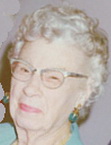
been used for many years. The pictures shown on this page are of four
key authors in the early history of statistical literacy. In 1951
Helen Walker (left below) wrote Statistical Literacy in the Social
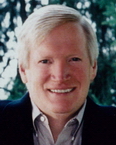
Sciences. In 1979, Dennis Haack (centered
below) wrote a textbook titled Statistical Literacy. In 1993 Katherine Wallman (pictured above)
wrote Enhancing Statistical Literacy: Enriching Our Society. Iddo
Gal (right below) has written numerous papers on statistical literacy (1995,
1997, 1999, etc.).

This page presents references to and
excerpts from books and articles
that were published during or before 2000 and that used the phrase "statistical literacy" or "quantitative
literacy." PDF
BOOKS
Books that used "Statistical literacy" in the title.
Books that used "Statistical literacy" in the
text but not in the title.
-
1962: "Chapter 5 The Data: Knowns and
Unknowns" in Growth of Industrial Production in the Soviet Union
published by the National Bureau of Economic Research, p. 13. "They
[the statistics for any country] contain, in the second place, errors
introduced at different stages of observation and assemblage. These will
depend on the state of statistical literacy among the collectors and
suppliers of data, on the effort expended on record-keeping, and on the
degree of active competition in gathering and analyzing data.
-
1968: ARNOLD, MAGDA B. (Ed.). The Nature of Emotion: Selected Readings. D BANNISTER - 1969 - Wiley
Online Library "... compactly in these 90 pages. The advice is
realistic - on the indispensability of statistical literacy, on the
right of schools to insist, despite research demands, on getting on with
the job of educating children. The warnings are wise ..."
-
1978: How to Use (And Misuse)
Statistics by Gregory A. Kimble; Prentice-Hall. "What I want
you to come away with is an appreciation of a style of thought and a
respectable level of statistical literacy. I see no necessity, with
these as my objectives, to dwell on formulas and computations."
-
1979: A Basic Course in Statistics.
By GM CLARKE and D. COOKE. Edward Arnold, 1978. Wiley Online Library ...
. "The author's aim is to give the reader 'an appreciation of a style of
thought and a respectable level of statistical literacy'. He adds, 'I
see no necessity, with these as my objectives, to dwell on formulas and
computations'. ..." *** 1978 and 1979 have same comment ***
-
1991: Quantitative Methods for
Historians: A Guide to Research, Data, and Statistics by Konrad H.
Jarausch, Kenneth A. Hardy; University of North Carolina Press.
"In attempting to meet the distinctive needs of methodological context,
computer experience, and statistical literacy, this book seeks to render
research design transparent, to help with establishing data bases, and
to provide... "
-
1992: Understanding Social Science
Statistics: A Spreadsheet Approach by Roger P. Bakeman; Lawrence
Erlbaum Associates. "I assume that your goal is basic statistical
literacy -- the ability to understand and critique the statistical
analyses others perform, and the ability to proceed... "
-
1997:
The Assessment Challenge in Statistics Education. Edited by Iddo Gal
and Joan B. Garfield. Excerpt: "Goal 1: Understand the purpose and
logic of statistical investigations. Goal 2: Understand the process of
statistical investigations. Goal 3: Master procedural skills. Goal
4: Understand mathematical relationships. Goal 5: Understand
probability and chance. Goal 6: Develop interpretive skills and
statistical literacy. Goal 7: Develop [the] ability to communicate
statistically. Goal 8: Develop useful statistical dispositions."
(pp. 3-5) **Verify quote**
-
1998: Reflections on Statistics:
Learning, Teaching, and Assessment in Grades K-12 Book by Susanne P.
Lajoie; Lawrence Erlbaum Associates. "and their views of statistical
literacy. One of the outcomes of this...possible to increase our overall
statistical literacy ..." "thereby promoting the notion of
statistical literacy."
-
1999: Improving Statistical
Reasoning: Theoretical Models and Practical Implications by Peter
Sedlmeier; Lawrence Erlbaum Associates. "Statistical literacy,
the art of drawing reasonable inferences from an abundance of numbers
provided daily by the media, is indispensable..."
-
1999 Seeing Through
Statistics by Jessica M Utts, Duxbury. "the use of
statistical methods In the real world. While the approach Is
nontraditional, I feel confident that the successful use of this text
would result in a high degree of statistical literacy. Not only does it
enable the student to ..."
-
2004: More Damned Lies and
Statistics: How Numbers Confuse Public Issues by Joel Best;
University of California Press. "Shouldn't we be able to teach
"statistical literacy"-basic skills for critically interpreting the
sorts of statistics we encounter in everyday life?"
"what if we call statistical literacy a basic skill? Certainly a
plausible argument exists for considering it in these terms. After all,
we are talking about teaching people to be more critical, to be more
thoughtful about what they read in the newspaper or watch in a news
broadcast, to ask questions about claims from scientists, politicians,
or activists. Being better able to assess such claims is certainly
valuable; we might even argue that it is fundamental to being an
informed citizen. Why not consider statistical literacy a basic skill?"
"Statistical literacy falls between the stools on which academic
departments perch." "The lessons involved in teaching statistical
literacy are not so terribly difficulty; rather, the difficulty lies in
finding someone willing to teach them." "In short, it may be
true that "everyone" agrees that improving statistical literacy is
desirable, but it isn't clear that they can agree on what statistical
literacy means, what improving it might involve, or what the
consequences of this improvement might be."
ARTICLES
Articles that used "Statistical literacy" in the title.
-
1951: Statistical Literacy in the
Social Sciences by Helen M. Walker. The American Statistician
Vol. 5,
No. 1 (Feb., 1951), pp. 6-12. Excerpts: "definitions of verbal literacy
may give us some useful clues as to the meaning of statistical
literacy." "The ideas which the modern citizen must understand are
becoming more complicated and many of them cannot be grasped without
some degree of statistical as well as verbal literacy." "In the
same way that complete verbal illiteracy is a stone around a man's neck
making it impossible for him to pursue a skilled trade or to rise to a
position of leadership among his fellows, even so does complete statistical illiteracy hamper a man in many vocations, interfere with
the wise conduct of many of his personal affairs and drastically curtail
his understanding of social issues." "To a very striking degree our
culture has become a statistical culture. Yet the level of statistical
literacy among the practitioners of the social sciences is appallingly
low. To bridge the gap in the system of communication between
statistician and social scientist, substantial improvement is necessary
in the social scientists' ability to use quantitative language."
"One reason why the students of Social Studies do not make more rapid
progress toward statistical literacy is that their statistical
experiences are too largely limited to the courses in which they study
statistics. They need to read more statistical material in their other
courses." "The computational skills of our field [statistics] can be
acquired in a fairly short time. Judgment, the ability to interpret, the
clarification of concepts and the ability to plan a survey or an
experiment are of slower growth. Consequently the one-semester
introductory course in which students learn a variety of computations
will inevitably turn out a large number of semi-literates."
"Sometimes a reader's disability comes from carrying over into
statistical reading the habits of very rapid skimming which he has found
to be an asset in reading purely verbal material. Those of us who teach
first courses in statistics may be able to suggest to our students that
they learn how and when to change gears." [Helen M.
Walker: 1 Dec 1891 to 15 Jan 1983]
-
1979:
Teaching Statistical
Literacy by Dennis Haack, Teaching
Statistics, 1, 74-76. Abstract: "More people have to read and
understand others’ statistics than have to carry out their own
statistical research. A first course in statistics should therefore
concentrate on statistics as a language." Text: "A
first course in statistics should teach statistics as a language rather than
as a research tool. Emphasis should be on interpreting statistics
rather than on calculating statistics."
-
1980:
A Note on 'Teaching
Statistical Literacy' by Dennis Haack,
Teaching Statistics, 2, 22-23. Abstract: "In his
previous article Dennis Haack discussed the philosophy behind his course
in teaching statistics as a language. Here he looks at some ways of
assessing students taking such a course."
-
1980: Social Indicators and
Statistical Literacy by JE Miller - Social Studies. 71:5
(1980:Sept./Oct.) 226. See eric.ed.gov. Abstract: Maintaining that people in
modern society stand in need of statistical literacy, the article
explains why education needs to provide this kind of literacy and
evaluates the degree to which education to date has been successful in
achieving its statistical literacy..."
-
1981:
Questioning strategies and
sample problems for a course in statistical literacy by Eleanor
Jordan, ASA Proceedings of the Section on Statistical Education,
103-108.
1981: Teaching Statistical
Literacy to Nurses by Dennis Haack.
ASA Proceedings of the Section on Statistical Education, 101-102.
-
1983:
Statistical Literacy by
Mike Perry, ASA Proceedings of the Section on Statistical Education,
92-96. "A definition of "Statistical Literacy" should include
statistical thinking and communicating statistically. "Statistical
thinking" requires dealing with ambiguities and open ended situations.
This is a significant leap for the student from the methodological
processing of algebra. It is one of the characteristics of the subject
which distinguishes it from being "just another math course." The
nurturing (teaching?) of "statistical thinking" must be an objective of
the introductory course."
-
1990:
Statistical Literacy in the Community. An invited session at
ICOTS-3. Invited papers: "Statistics
for All: Why, What, and How?" by David Moore (USA) p. 414-415 and p.
423-428. "Statistics
in China" by Liang Zhishun (Guangzhou, China) p. 416-422. Also
"The
Role of Statistics in Achieving Numeracy for All" by Jean Thompson
(Wellington, New Zealand) p. 429-432. Panel discussion: Professor
Paul Bungartz of Bonn University, Germany; Professor Toby Lewis, retired
from the Open University, England; and Professor Jagdish Rustagi of the
Ohio State University, USA.
-
1990: "The
Role of Statistics in Achieving Numeracy for All" by Jean Thompson
(Wellington, New Zealand) p. 429-432. "Our society accepts the
fact that the quest for literacy - learning to read and write - is a
crucial element of education and I certainly do not argue with that.
What I do argue is that we need more than literacy. We live in an age
when qualitative understanding is not enough. Numbers and measures are
everywhere. We need numeracy together with literacy as joint crucial
elements of education for the 21st century." "Why is literacy accepted
as a basic requirement to progress in every subject area? Because it is
acknowledged as important for all. Gaining literacy skills is expected.
Small children are told reading is fun, reading is good, reading gives
you information. Then these facts are demonstrated and constantly
re-iterated and indeed embedded into the entire learning process. Now
use the parallel of learning to read and write for teaching numeracy
skills. We need to expect our children to grasp numeracy skills. We need
to demonstrate and constantly re-iterate and indeed ensure that numeracy
is embedded into the entire learning process." "To achieve this
embedding, and so have the opportunity to demonstrate and reiterate, I
suggest we use Statistics. Statistics is the collection, arrangement and
interpretation of numerical facts or data. Here we have the ideal
vehicle for this transformation, the means by which we can demonstrate
the relevance of numeracy skills instead of just calling for them. Note
here that I am not talking about theoretical statistics, but about the
sensible use of numbers, the use of display techniques such as graphs
and charts, and the extraction of information from numbers. These ideas
can and should be applied in all subject areas. This is how we can make
sure our material is constantly linked to real situations. However,
rather than taking situations out of other subject areas and carrying
them into the mathematics and/or statistics lessons, how about taking
basic statistical tools into the fabric of all school activities?"
-
1992: ASA Session:
Improving Statistical Literacy: Classroom, Community, and Consulting
Issues. Chair/Organizer: Gwyneth Boodoo, Educational Testing Service
Conceptualizing applied
statistics: A current need by Sharon L. Weinberg in the 1993 ASA
Proceedings of the Section on Statistical Education, 233-238.
Improving Statistical
Literacy among consultants and clients, Patricia Busk, 1993 ASA
Proceedings Section Statistical Education, 239-246.
Statistical Literacy for
whom: The case of the two-year colleges by Miriam Grosof & Hyman Sardy,
1993 Proceedings Statistical Education, 247-253.
Comment on "Improving
Statistical Literacy" by Juliet Shaffer, 1993 ASA Proceedings of the
Section on Statistical Education, 254-257.
-
1993: Enhancing Statistical Literacy:
Enriching Our Society by
Katherine K. Wallman.
Journal of the American
Statistical Association Vol. 88, No. 421 (Mar., 1993), pp. 1-8. Excerpts
[bold added]: P. 1, "my hope that by enhancing statistical literacy, we
may succeed in enriching our society." "My aims are ... to
highlight some avenues we can pursue to enhance our citizens'
statistical literacy." "As I gathered and read materials on
'statistical literacy' from many sources, the diversity of views I
encountered mirrored the breadth of perspectives our colleagues within
and outside the statistics profession bring to this subject. The
perspective I offer is this: Statistical literacy is the ability to
understand and critically evaluate statistical results that permeate our
daily lives -- coupled with the ability to appreciate the contributions
that statistical thinking can make in public and private, professional
and personal decisions." "These mis-es [misunderstandings,
misperceptions, mistrust and misgivings], I contend, are rooted in
society's lack of statistical literacy." P. 3, "As a society we
face many issues. These ... difficult problems stand to benefit
from the contributions that statisticians can make to our understanding,
and from increased statistical literacy from both policy makers and the
public." "There are among those responsible for the education of
our citizens many who fully understand the importance of promoting
statistical literacy. I think of Dean Hubbard, President of
Northwestern State University, who is working to establish a "statistics
for the common man" course as a requirement of the university's core
undergraduate curriculum." "The lack of statistical literacy
extends as well to industrial settings." P. 4, "Most vexing
of all is the problem faced by our citizens, who encounter statistics at
every turn in their daily lives, yet often are unequipped with the
statistical literacy required to evaluate the situation."
"Numerous pathways, some already being traveled, others awaiting our
footsteps, may be taken as we work both within the ASA and with
colleagues in other disciplines and professions to enhance our citizens'
statistical literacy." P. 6, "To advance our citizens'
statistical
literacy, I would advocate further development of clear, simple,
meaningful terminology and notation that could be promoted and used by
our popular media in their reporting of statistical information."
P. 7., "Those of you who are out in the real world are in the best
position to inform the fundamental question, "How can statistics be of
use to our citizens?" You will be the key to working with
the popular media -- and thus enhancing our citizens' statistical
literacy." "A major theme of his address [Peter Moore's 1990 RSS
Presidential address], as I read it, is that we must educate the
consumer -- and the potential consumer -- to better understand
statistics and more fundamentally [to understand] statistical thinking
-- [and] to add statistical literacy to his or her skills. (Moore,
1990)" "If we wish to continue to heed the mandate of our
founders -- "to be of service to science and society" -- we must
heed the needs of customers both in our professional society -- the ASA
-- and in the larger society we seek to serve -- our customers in
government and industry, whether they are on the front line or in the
computer room; our customers in the education system, whether they are
college presidents or classroom teachers or students; and our customers
in the media, who most often bring our work to the ultimate customers --
our fellow citizens. It is these audiences to whom we must bring
statistical literacy -- and those audiences will determine whether
statistical thinking makes a difference in their personal and
professional pursuits." P. 8, "As we endeavor to
to enhance statistical literacy, I believe we will enrich both our
professional society -- the American Statistical Association -- and the
society in which we live."
-
1995: Statistical Tools and
Statistical Literacy: The Case of the Average by Iddo Gal, Teaching Statistics,17, 97-99."the
teaching of statistics is often justified by referring to demands on
citizens and consumers who live in an information society" but mostly
require "students to compute rather than interpret …. This may not be
sufficient to develop students' statistical literacy skills and make
sure they can come up with reasonable interpretations of statistical
statements and arguments encountered in newspaper articles, TV news,
advertisements, or on the job." "The range and fragility of student
responses and the diversity of existing knowledge gaps suggest the need
to broaden the content of percent instruction beyond computation. many
students are likely to leave school with an incomplete conceptual
understanding and computational knowledge of percent, as well as with
insufficient preparation for using or understanding the use of percents
in the real world." Published online in 2007.
1995:
Statistical literacy: A link between mathematics and society
by Jane Watson. In A. Richards, G. Gillman, K. Milton, & J. Oliver
(Eds.), Flair: Forging links and integrating resources (pp. 12-28).
Adelaide, SA: Australian Association of Mathematics Teachers.
Reprinted in Reflections, 20(3), 36-45, August, 1995.
-
1997:
The Need for Statistical
Literacy in Australia by Jane Watson Science News
-
1998: Fedstats promotes
Statistical Literacy. Cathryn Dippo.
Communications of
the ACM; Apr98 Vol 41 Issue 4, p58-60. Abstract: "The major
statistical agencies of the federal government in the U.S. have created
a publicly accessible digital library called FedStats."
Body: "promotes knowledge discovery through statistics and improved
statistical literacy, extensive research and development efforts are
needed to address not only the technical issues …"
1998: Statistical literacy: What's the chance? by Jane
Watson in Reflections 23,6-14.
1998:
Statistical Literacy and
Statistical Competence by David Moore, MSMESB Univ. Iowa.
Abstract only. "Educated people
face a new environment at century's end: work is becoming intellectualized,
formal higher education more common, technology almost universal, and
information (as well as mis- and dis-information) a flood. In this setting,
what is statistical literacy , what every educated person should
know? What is statistical competence, roughly the content of a first
course for those who must deal with data in their work? One might define
competence as what we hope a business statistics student will retain five
years later."
1998:
Statistical Literacy -- Statistics Long After School by Jerry
Moreno, ICOTS-5.
1998: Assessing statistical
literacy through the use of media surveys Jane Watson
ICOTS-5
1998:
Statistical Literacy And Adolescent Risk by Jonathan Moritz,
ICOTS-5.
1998:
Statistical Literacy For Law Students: Six Hours To Teach! by Anne
Porter. ICOTS-5.
1998:
Stumbling Blocks On The Road Towards Statistical Literacy by Herman
Callaert. ICOTS-5.
1998: Statistical Literacy and Evidential
Statistics by Milo Schield. ASA Proceedings of the
Section on Statistical Education, 187-192. "To achieve
statistical literacy for all, introductory statistics must be expanded
to include evidential statistics– the use of statistics as evidence in
arguments involving practical reasoning about causality."
-
1999:
Teaching Statistical Literacy by Peggy B. Cerrito (U. Ky) College
Teaching; v47, n1 p9-13 Win 1999. Eric Abstract: "Argues that
statistical literacy is a necessary component of a complete college
education and important in combating growing innumeracy in American
society, and describes a general education course at the University of
Louisville (Kentucky) that includes it. Instruction focuses on societal
issues, sometimes controversial, for which an understanding of
statistics and their use is crucial." Extracts: "Statistical
literacy is no longer a luxury; it is a necessity." "The public
can be duped by almost anyone capable of spouting numbers, percents and
p-values." "How can statistical literacy be taught effectively?
... It must be introduced into a general education course."
For-pay download at
Routledge: Taylor and Francis Group
1999:
Statistical literacy: Conceptual and instructional issues by Iddo
Gal. Chapter 8 in
Perspectives on Adults Learning Mathematics
1999: Conceptualizing
statistical literacy: An assessment perspective by Iddo Gal at
SRTL-1. http://srtl.fos.auckland.ac.nz/?page_id=159
1999:
Using Chance Media to promote Statistical
Literacy by J. Laurie Snell, ASA.
1999:
The dissemination of statistical literacy among citizens and public
administration directors by Luigi Biggeri and Alberto Zuliani.
ISI-52.
1999:
Statistical Literacy: Thinking Critically About Statistics by Milo
Schield. 1999 APDU Of Significance. Vol 1, No 1. P. 15-20.
Abstract: "Statistical literacy is the ability to read and interpret
data: the ability to use statistics as evidence in arguments.
Statistical literacy is a competency: the ability to think critically
about statistics. This introduction defines statistical literacy as a
science of method, compares statistical literacy with traditional
statistics and reviews some of the elements in reading and interpreting
statistics. It gives more emphasis to observational studies than to
experiments and thus to using associations to support claims about
causation."
-
2000: Statistical literacy:
Conceptual and instructional issues by Iddo Gal in D. Coben, J.
O'Donoghue, & G. FitzSimons, (Eds.), Perspectives on Adults Learning
Mathematics (pp. 135-150). London: Kluwer Academic Publishers.
2000:
Statistical Literacy and Mathematical Reasoning by Milo Schield.
International Conference on Mathematics Education (ICME-9), Tokyo.
Abstract extract: "Statistical Literacy, the study of statistics as
evidence in arguments, is proposed as a new course – a bridging course
to better prepare students for the traditional statistics course.
Statistical Literacy can also be a stand-alone course with its focus on
observational studies and confounding factors. The mathematics involved
in statistical inference of traditional statistics are reviewed. Causes
of student difficulties are located in two areas: conditional
probability and the relation between chance and confounding. These two
problems are related to two areas of mathematical thinking: conditional
thinking and contextual thinking. A statistical literacy course designed
to remedy these deficiencies is proposed."
-
2001:
Statistical Literacy: Reading Tables of
Rates and Percentages by Milo Schield. ASA Proceedings of the
Section on Statistical Education, ??-??.
2001:
Statistical Literacy and
Statistical Competence by David Moore, IASE slides [No
definitions Ed.]
2001: Statistics Literacy
by Brian Phillips, IASE slides
-
2002:
Adults'
Statistical literacy: Meaning, components, responsibilities by Iddo
Gal, International Statistical Review 70(1), 1-25."Statistical literacy
is a key ability expected of citizens in information-laden societies,
and is often touted as an expected outcome of schooling and as a
necessary component of adults' numeracy and literacy."
2002: Developing statistical literacy: Towards implementing change
by Iddo Gal. International Statistical Review, 70(1), 46-51.
2002:
Preparing for Diversity in Statistics Literacy: Institutional and
Educational Implications by Scott Murray and Iddo Gal. ICOTS-6.
2002:
Towards a Statistically Literate Society: What Statistics Everyone
Should Know by Jerry Moreno, ICOTS-6.
2002:
Promoting Statistical Literacy: A South African Perspective
by P. Lehohla, ICOTS-6.
2002: Three Kinds of Statistical
Literacy: What Should We Teach? by Milo Schield,
ICOTS-6.
2002:
Promoting Statistics Literacy: New Opportunities for the Training of
Institutional Research Professionals by Linda Hewitt. ICOTS-6.
2002:
Statistical Literacy and the Media by W. Martin Podehl, ICOTS-6.
-
2003: Expanding conceptions of
statistical literacy: An analysis of products from statistics agencies
by Iddo Gal. Statistics Education Research Journal. 2(1), 3-22.
(Electronic refereed journal: www.stat.auckland.ac.nz/serj)
2003: Teaching for statistical literacy and services of statistics
agencies by Iddo Gal, The American Statistician, 57(2), 80-84.
"Teaching for statistical literacy and services of statistics
agencies...interrelated concepts such as statistical literacy (Wallman
1993), quantitative...ability will be termed here "statistical literacy
following an early use of this... "
Articles that used "Statistical literacy" in the
text but not in the title and not as a reference.
-
1940: Statistical Trends by William
Fielding Ogburn. Journal of the American Statistical Association
Vol. 35, No. 209, Part 2: [Proceedings of the Centenary Celebration]
(Mar., 1940), pp. 252-260. Excerpt: "In the early days when
statistical literacy was low, those who could read and write this new
language were set off and apart from the others. They were labeled
statisticians. But now most any social scientist can compute a
correlation coefficient and can read and write the statistical language
to some extent. Indeed, the arithmetics for eighth grade in the public
schools now have sections on statistics. So a degree of statistical
literacy will be universal in the future since 100% of the children go
to the elementary school and 65% to the high schools."
-
1943: Statistics—The
Mathematics for Social Problems. Douglas Scates - The
Mathematics Teacher. "... work while we are
attempting the far larger and more universally important task of
training citizens. Our selection of objectives for a high school course
in statistics will be guided accordingly. Three objectives seem to stand
out prominently: 1. To produce statistical literacy. ... " "the
ability to read diagrams and maps; a 'consumer' understanding of common
statistical terms, as average, per cent, dispersion, correlation, and
index number."
-
1945: Paper review by Helen M.
Walker (Colombia Univ.). "In 1942, at the Second Institute for
Teachers of Elementary and Secondary Mathematics held at Duke University
over a period of 10 days, Douglas Scates gave a series of lectures on
this theme, one of which was later printed under the title
"Statistics-the Mathematics for Social Problems," in 'the Mathematics
Teacher, February 1943. This paper should be read and pondered by anyone
who proposes either to teach statistics or to develop teaching materials
for high school students. He considers the goals of such teaching to be:
(a) to produce statistical literacy, (b) to accustom young people to
doing their thinking about personal and social problems in terms of
quantitative facts wherever appropriate, and (c) to familiarize young
people with the processes of gathering data, and the elementary modes
of' interpreting them. Only for students of more than average ability
who have an intrinsic interest in the manipulation of figures, would he
suggest as a fourth objective some technical skill in calculating and
drawing diagrams." JASA 40:231, 377-415.
-
1949: Goethe's View of Law-With a
Gloss Out of Plato. EN Cahn - Colum. L. Rev. - HeinOnline
"Statistical literacy, of course, means very little in this connection:
people who have to move their lips in order to read, though
statistically literate, are infrequently observed with either Plato or
Goethe in their hands."
-
1950: ASA JSM Session: Statistical
Literacy in the Social Sciences, Section on the Training of
statisticians. Speaker: Helen M. Walker, Colombia University.
Chairman: Philip M. Hauser, University of Chicago. The American
Statistician, 4:4,9-18, DOI: 10.1080/00031305.1950.10501650
-
1962: Statistics We Live By by Martin
R. Gainsbrugh. Journal of the American Statistical Association Vol.
57, No. 297 (Mar., 1962), pp. 1-9. Excerpts: "In our rush to
develop and articulate the framework of economic intelligence, we have
been too quick to assume a higher level of statistical literacy and of
general public understanding than the facts warrant. Many texts,
perhaps too many, are now devoted to the fields of statistical
techniques, sampling procedures and the impressive mathematical
contributions of the last quarter century from which the statistician
has so richly benefitted. Few, indeed, are the contributions dedicated
to placing before the lay consumer the descriptive, qualitative,
conceptual materials that are prerequisites to assure an adequate
understanding of the statistics we live by." "Even the
sophisticated user of [economic and social] accounts knows there is no
easy path through the jungle of descriptive literature in which are
hidden the details on weighting, classification, conventions,
imputations, and the myriad qualifications with which each key statistic
is surrounded." "The data we compile has never been more universally
followed than they now are. Each of us can wrestle with his own
conscience in replying to the inevitable corollary to such an
observation: Are they better and more widely understood?"
-
1962: Statistics in Army Research
Development and Testing by Clifford J. Maloney. The American
Statistician Vol. 16, No. 3 (Jun., 1962), pp. 13-17. Excerpt:
P. 14, "Primary responsibility for the adequacy of the Army's
utilization of statistical principles rests with this group, but the
task would be overwhelming in the absence of a high degree of
'statistical literacy' on the part of the R&D personnel whose
specialties lie in other directions and on a corps of contractor
personnel and part-time expert consultants -- usually academic."
-
1965: The Concept of Panchayati Raj
and Its Institutional Implications in India by Iqbal Narain.
Asian Survey Vol. 5, No. 9 (Sep., 1965), pp. 456-466.
Excerpt: P. 463, "Related to this [our professed goal of a socialist
society] is the role education (as opposed to mere statistical literacy)
is to play in enriching the content of rural democracy in participatory
terms."
-
1967: Subjective Aspects of Applied
Statistics by A. F. Bissell. The Statistician Vol. 17, No. 4
(1967), pp. 385-400. Excerpts: P. 392, "One must avoid the allure of
PIPE: Plausible, intuitive, and Probably Erroneous." P. 396, "The
results of an analysis may be misinterpreted by the client unless
guidance is given.... There is probably no universal escape from
this dilemma -- the solution must be adapted to the particular problem,
and to the statistical literacy of the client."
-
1967: Ideologies and Attitudes,
Academic and Judicial by Glendon Schubert. The Journal of Politics
Vol. 29, No. 1 (Feb., 1967), pp. 3-40. Excerpts: P. 11,
"Academic ideologies tend to determine academic attitudes toward the
study of judicial attitudes. Attitudinal differences imply
differing choices among such core components of academic attitudes as
modes of discourse, logic, statistical literacy, rationality,
empiricism, methodology and scientism." P. 15, "Statistical
literacy" -- the title of a section.
-
1970: The Dimensions of Comparison,
and of Comparative Education by Reginald Edwards. Comparative
Education Review Vol. 14, No. 3, Papers and Proceedings: Annual
Conference of the Comparative and International Education Society,
Atlanta Georgia, March 22-24, 1970 (Oct., 1970), pp. 239-254.
Excerpt: P. 253, "In ... the training of educational researchers, D. R. Krathwohl has identified three dimensions, or axes, within which the
position of any department of education research could be located.
... the dimensions for our preparation would not be dissimilar.
The first axis would be mathematical/statistical literacy, the second
would be social science background, and the third professional
orientation. The first would require more than just training in
statistics. As well as an introduction based on probability theory, a
knowledge of matrix algebra, and differential equations is necessary,
and there should certainly be some contact with computer programming."
-
1976: Issues from the NACOME
Report by S Hill. The Mathematics Teacher. "In
technical, business, or social science careers and in a wide range of
decision-making situations affecting all citizens, statistical thinking
is crucial. We urge all schools and systems to be sure that their
students receive statistical literacy in mathematics education. ..."
-
1976: Essential probabilistics in
modelling. JR Anderson - Agricultural Systems, 1976 -
Elsevier "These questions point to a level of statistical
literacy among the modelling fraternity that may in part explain the
preponderance of deterministic (ie nonprobabilistic) models. Of course,
there is nothing new in the suggestion that stochasticity in models is
respectable and proper. ..."
-
1980: Social data analysis
instruction and the MISSIS system. RE Anderson, KR Krohn… -
Behavior Research Methods, Springer "With regard to the last
objective, the most crucial skills are statistical literacy and computer
literacy. In order to be productive in contemporary research
environments, one must be facile in these functional arenas. ...
-
1985: "Statistical abuse" cited by
Census director. (John G. Keane) by Anita Hess. American Metal Market
93.(Nov 1, 1985): p.p18(1). From General OneFile. "… the
mail recently. The story was meant to promote "statistical literacy,"
but there seemed to be a hint of indignation in Keane's words. …"
-
1987: Buchanan and the
Constitutional Bases of Political Decision Making by Vincent Ostrom.
PS Vol. 20, No. 2 (Spring, 1987), pp. 242-246. Excerpt: P.
245, "We might expect an increase in constitutional literacy to be
accompanied by parallel developments in statistical literacy and
mathematical literacy. Constitutional literacy [the reason of
rules accompanying the reason of law], if it is to have empirical
referents and a computational logics with an empirical warrantability
requires application to operational and collective-choice levels of
analysis. Mathematical literacy is important in establishing
computational logics; statistical literacy is important in establishing
empirical warrantability."
-
1988: What Should the Introductory
Statistics Course Contain? by Gerald J. Hahn. The College
Mathematics Journal Vol. 19, No. 1 (Jan., 1988), pp. 26-29.
Excerpt: P. 20, "the general aim of an introductory course in statistics
should be to provide some level of statistical literacy, and an
appreciation of the role of uncertainty. It should enable students to
apply statistical methods in order to obtain and evaluate their own
data." P. 28, "An integral part of the course should be a study:
selected, designed, conducted and analyzed by each class member
individually -- or in small groups. All this leaves little time for
discussions of statistical inference and calculations around which many
of our current courses are built (and which are regarded as boring by
most non-statisticians)." "When we do discuss specific inference
methods, I strongly advocate interval estimation." "We must make
clear that statistical methods are based on mathematical theory.
Such theory must be part of the foundation in the training of a
professional statistician, but it does not belong in a general
introductory course."
-
1989: Graduate Statistics Service
Courses in Part-Time Off-Campus Programs by Gabriella M. Belli; William
L. Seaver.
The American Statistician Vol. 43, No. 2 (May, 1989), pp. 86-90.
Excerpt: P. 89, "Recommendations about the need for better textbooks,
for computer software that enhances statistical literacy, and for
greater use of real data sets ..."
-
1990: ASA Celebrates Sesquicentennial
by Gary G. Koch; Fred C. Leone; Robert L. Mason. The American
Statistician Vol. 44, No. 2 (May, 1990), pp. 113-115.
Excerpt: P. 114 "In a session, "A Conversation with Experts, Margaret E.
Martin chaired a discussion on the successes and failures in that last
50 years with David R. Cox, W. Edwards Deming, Morris Hanson, C. R. Rao,
and John Tukey. The successes sited included the increased
use of statistical methods and the growth of training programs for
statisticians from universities or continuing-education courses.
The primary failures discussed were the insufficient statistical
literacy in the general public, and a lack of emphasis on practical
problems by education programs in statistics."
-
1990: The Skills Challenge of the
Nineties by Peter G. Moore. Journal of the Royal Statistical
Society. Series A (Statistics in Society) Vol. 153, No. 3 (1990), pp.
265-285. Excerpts: "The basics of mathematics, of numeracy, and of what
I would call statistical literacy are more easily absorbed by young
children than by adults, and that will not change during a person's
lifetime." "What is needed is 'statistics across the curriculum'
so that the art of drawing sensible conclusions from uncertain data can
be a natural element of the education process."
-
1990: Biostatistical
Collaboration in Medical Research by Jonas H. Ellenberg; Peter Armitage;
Thomas C. Chalmers; Edmund A. Gehan; Judith R. O'Fallon; Stuart J.
Pocock; Marvin Zelen. Biometrics Vol. 46, No. 1 (Mar., 1990),
pp. 1-32. Excerpt: P. 29, Rejoinder: The biostatistician must be
able to deal with the possible confusion or suspicion created by these
disagreements [involving medical scientists] in bringing statistical
literacy to the public health arena."
-
1991: An Undergraduate Concentration
in Applied Statistics for Mathematics Majors by Marie Gaudard; Gerald J.
Hahn. The American Statistician Vol. 45, No. 2 (May, 1991), pp.
115-120. Excerpt: P. 116, "The program [the proposed curriculum]
should also help students which areas of application appear most
attractive. As indicated, some will be motivated to obtain more
in-depth training later in their careers. Others may eventually
move away from statistics, perhaps into the application area itself.
These individuals will bring a high level of statistical literacy to
their work."
-
1991: Improving Doctors'
Understanding of Statistics by Douglas G. Altman; J. Martin Bland.
Journal of the Royal Statistical Society. Series A (Statistics in
Society) Vol. 154, No. 2 (1991), pp. 223-267. Excerpt: P.
253, "All doctors need to acquire skills in the critical evaluation of
the medical literature but a majority of medical graduates are not going
to work in a research environment. Some medical graduates will
spend a period in research as an essential part of their career
development. A relatively small number of doctors will remain
within the academic environment and will continue to pursue research
throughout their career. It is clear that the statistical literacy
required by the three groups [of doctors] are different."
-
1993: Software Reviews by L. Carl Leinbach.
The College Mathematics Journal Vol. 24, No. 3 (May, 1993),
pp. 263-270. Excerpt: P. 270, "America is not going to get a
quality education until its managers and workers have some grasp of
probability and statistics. -- the lingua franca of quality.
Unfortunately, corporate statistical literacy is abysmally low."
-
1995: Qualitative Research in Applied
Linguistics: A Progress Report by Anne Lazaraton. TESOL Quarterly
Vol. 29, No. 3, Qualitative Research in ESOL (Autumn, 1995), pp.
455-472. Excerpt: P. 456, "One broad-based survey of 121 applied
linguists clearly acknowledged that 'qualitative approaches to data
collection and analysis are clearly important for the types of questions
asked in linguistic research', however the survey only assessed
statistical literacy."
-
1995: The State of Our Malaise:
Introduction by Robert Weissberg; Perspectives on Political
Science, Vol. 24. "Access to data and statistical literacy
permit anything to be quickly analyzed, at least among those possessing
the relevant skills."
-
1996: The Language of Statistical
Understanding: An Investigation in Two Countries by Jonathan Moritz,
Jane Watson and Lionel Pereira-Menoza. "The importance of
statistical literacy as a basis for deeper statistical understanding is
recognised widely in the curriculum documents from several countries."
Copy at
http://www.aare.edu.au/96pap/morij96280.txt.
-
1996: A Look at the Literature (And
Other Resources) on Teaching Statistics by Betsy Jane Becker. Journal of
Educational and Behavioral Statistics Vol. 21, No. 1, Special Issue:
Teaching Statistics (Spring, 1996), pp. 71-90. Excerpt: P. 71, Based on
ERIC citations involving 'statistics', "There is little question that in
many areas of academe statistical literacy is important." The
inclusion of standards for statistical literacy for the mathematics
curricula in the NCTM standards has put the force of the main
association for primary and secondary mathematics teachers behind the
move to introduce statistics to lower grades."
-
1997:
The First R -- For Reasoning
by Anne Hawkins, President of the RSSCSE. ""Statistics for All" policies
do not necessarily yield "Statistical Literacy for All"."
"Research would suggest that the simple answer to the question "Can a
mathematically educated person be statistically illiterate?" is "Yes".
Statistical and probabilistic misconceptions persist in people who have
followed mathematics courses even to quite high levels. Indeed,
Fischbein and Schnark (1997) have reported finding that some
misconceptions seem actually to worsen with exposure to more
mathematical training." ""Statistics for All" policies tend to
emphasise knowledge of techniques, while what we really need to develop
are the skills, understanding and inclination to use such techniques,
i.e. "Statistical Literacy for All". My two criteria for assessing
whether statistical education has succeeded would be that its recipient
was able to function effectively in a world of uncertainty, and had the
skills to summarise and represent information (be it qualitative or
quantitative) for him/herself and others." "Statistical literacy
certainly requires a synergy of all the 4 R's, but these must be
manifest in a rather broader range of activities, including, at least:
literacy; numeracy; visualisation; graphicacy; pattern perception; (re)presentational
skills for qualitative or quantitative data; fluency in language and
principles of statistics and probability; appreciation of chance and
randomness; ability to operate in the real (multivariate) world; ability
to construct as well as to manipulate (probabilistic) models; ability to
communicate, comprehend and critically evaluate arguments couched in
statistical or probabilistic terms; appreciation of investigative rigour;
computer literacy." "Let us assume that what we want to achieve is
"statistical literacy" for all, and "statistical literacy plus" for
some. If we take a dimension of specialists from users to producers of
statistics, we can see that non-specialists and specialists in other
subjects would not necessarily need highly developed "production" (i.e.
"literacy plus") skills. We do, however, need non-statisticians to
understand the principles (and language) of statistics, although a
statistician who cannot talk to the non-specialist in a language that
the latter will understand is just as statistically illiterate as
someone who is unversed in statistics." "If there is no guarantee
that more and more "plus" necessarily turns into statistical literacy,
it is time for us to stop hitting our heads against a brick wall, and to
engage in more radical rethinking about our approach to statistical
education. Statistical education has evolved to where it is at present,
but there is a case for saying that this is not the right starting point
for where it should be going in the future." "The really big
research question that faces us, though, is how to produce statistically
literate citizens."
-
1997:
Anne Hawkins' reply (1997) to
David Moore's "New Pedagogy and New Content: The Case of Statistics.
International Statistical Review, 1997. "The question is, what
competencies do we want the extremes of this dimension to possess? I
would argue in favour of 'Statistical Literacy for All', that emphasises
understanding over facts and tools..." "Statistics for All, in the
absence of literacy, is worthless." "Statistical Literacy for All must
be the bread on which some may spread butter, jam, or even caviar."
"statistical literacy can be interpreted as meaning an ability to
interact effectively in an uncertain (non-deterministic) environment."
"A statistically literate person must understand the strategies for data
collection and analysis, as well as the nature of chance processes and
their relevance to data collection, and the assumptions that underlie
statistical reasoning." "Nor does statistical literacy feature
prominently, if at all, in discussions about raising the literacy of the
population. It seems that statistical literacy falls between a number of
stools, and does not receive the widespread consideration that it
should." "a move towards statistical literacy for all should be
accompanied by a move towards making statistical language intelligible
to all." "We have a responsibility to provide courses that allow
students to experience the real nature of today's (and the possibilities
of tomorrow's) statistics. Assessment methods must reflect, not impede,
this. They cannot be allowed adversely to dictate content and pedagogy.
To re-think our objectives for both non-specialist and also specialist
education, and to recognise and embrace new possibilities, however, will
require many of us to forget old ideas." "Sadly, some of our current
practices do not suggest that we really want to do this, nor do they
always present the synergy of skills, knowledge and understanding that
represent the real and adaptable natures of statistics."
-
1997: [Bayes for Beginners? Some
Reasons to Hesitate]: Discussion by Thomas H. Short. The American
Statistician Vol. 51, No. 3 (Aug., 1997), pp. 263-264.
Excerpt: 'Berry uses his consulting experiences to illustrate the
applicability of Bayesian methods, and Albert incorporates examples from
sports and student-generated data into his introductory courses.
Both provide a fundamental statistical literacy for their students."
-
1997: Essential Topics in
Introductory Statistics and Methodology Courses by N. Giesbrecht, Y.
Sell, C. Scialfa, L. Sandals, P. Ehlers; Teaching of Psychology,
Vol. 24. "Pereia-Mendoza and Swift (1981) recognized a need for
statistical literacy and asserted that "individuals need a knowledge of
statistics and probability to function in our society."
-
Discussion by Thomas H. Short.
(response to articles in this issue by Donald A. Berry Jim Albert and
Davis S. Moore, P. 241, 247 and 254). The American Statistician 51.n3
(August 1997): pp263(2). "… introductory courses. Both provide a
fundamental statistical literacy for their students. …"
-
1998: Statistics among the Liberal
Arts by David S. Moore. Journal of the American Statistical Association
Vol. 93, No. 444 (Dec., 1998), pp. 1253-1259. Excerpt:
P. 1257, "Pinker gives an example that I will use to illustrate the fact
that even the most basic aspects of statistical literacy require the
regularity of a civilized environment. High on my list of
elements of statistical thinking is the claim that data beat anecdotes."
-
1998: A one-semester,
laboratory-based, quality-oriented statistics curriculum for engineering
students by Russell R. Barton, Craig A. Nowack, Soren Bisgaard,
Veronica Czitrom, John D. Spurrier and Stephen Vardeman. (includes
comments and reply) The American Statistician 52.n3 (August
1998): pp233(11). "He remarked that statistical literacy is a key
to Intel's competitiveness, but that the courses engineers ..."
-
1998: [A One-Semester,
Laboratory-Based, Quality-Oriented Statistics Curriculum for Engineering
Students]: Discussion by Veronica Czitrom. The American
Statistician Vol. 52, No. 3 (Aug., 1998), p. 240. Excerpt:
"Craig Barrett, President of Intel, gave an invited presentation at the
Joint Statistical Meetings several years ago. He remarked that
statistical literacy is a key to Intel's competitiveness, but that the
courses engineers receive in college do not teach them the applied
statistics they will need at Intel."
-
1998: Learning to win: nurses have
retained a sense of "we-ness" deeper than the urge to close ranks
against a hostile world by Mary O'Brien. Canadian Woman Studies
18.4 (Dec-March 1998): p21-7. (6187 words) "… well-educated person meant
ease and precision with language, and the much vaunted statistical
literacy seems to be indifferent to the death of actual literacy. The
danger is …"
-
1999: Interpreting & predicting
from bar graphs by Jane Watson and Jonathan Moritz. Australian
Journal of Early Childhood 24.2 (June 1999): p22. "Viewing graph
comprehension as part of statistical literacy (e.g. Watson &
Pereira-Mendoza, 1996) implies that students need to develop not only
skills for reading the grammar…"
-
1999: The Future Role of Statistics
in Quality Engineering and Management by A. Bendell; J. Disney; C.
McCollin. The Statistician Vol. 48, No. 3 (1999), pp. 299-326.
Excerpt: P. 299, "Although statisticians are clear on the
contributions their discipline has made historically in various aspects
of industry and commerce, they continue to be concerned that the
business world does not take statistical literacy or statisticians
seriously enough."
-
1999: Statistical Methods for
Engineers by Richard Cleary. Review. The American
Statistician 53.3 (August 1999): p292. "… grades all suggest that the
idea of first forming statistical literacy, and then teaching
discipline-specific topics, is gaining currency."
-
2000: Applying Cognitive Theory to
Statistics Instruction by Marsha C. Lovett; Joel B. Greenhouse.
The American Statistician Vol. 54, No. 3 (Aug., 2000), pp. 196-206.
Excerpt: P. 203, "In the case of statistics education, the emphasis on
the 'practice of statistics' can be seen through a number of different
changes to course curricula. Course goals no longer refer to a student's
ability to to derive particular statistical formula or to compute
certain statistics by hand, but rather they refer to 'statistical
literacy' and students' ability to reason statistically about real-world
problems. For example, the course called 'Chance' (Snell, 1996)
builds its entire curriculum around statistical problems that arise as
current issues in the media."
-
2000: Developing Concepts of Sampling
by Jane M. Watson; Jonathan B. Moritz. Journal for Research in
Mathematics Education Vol. 31, No. 1 (Jan., 2000), pp. 44-70.
Excerpts: P. 44, Abstract: "Responses [to questions on sampling] were
characterized in relation to the content, structure and objectives of
statistical literacy." "Another issue [in children's education] is
associated with the goal of students' achieving, before they leave
school, a level of statistical literacy that will allow them to
contribute meaningfully to social decision making based on quantitative
data." Many other references.
-
2000: Statistical Thinking and
Learning by Brian Greer. Mathematical Thinking & Learning; 2000,
Vol. 2 Issue 1, p1-9, 9p. Excerpt: "Gal and Garfield (1997b)
listed the following as goals for statistical education: Goal 1:
Understand the purpose and logic of statistical investigations. Goal 2:
Understand the process of statistical investigations. Goal 3: Master
procedural skills. Goal 4: Understand mathematical relationships.
Goal 5: Understand probability and chance. Goal 6: Develop
interpretive skills and statistical literacy. Goal 7: Develop [the]
ability to communicate statistically. Goal 8: Develop useful
statistical dispositions. (pp. 3-5)"
-
2000: Statistics for Social
Progress by Lenne Mikkelsen and Clare Menozzi. Statistical
Journal of the UN Economic Commission for Europe; 2000, Vol. 17 Issue
3/4, p201, 60p. Exerpt: "The importance of disseminating
statistical information raised, in turn, the issue of increasing the
general public's "statistical literacy". Increasing the awareness to the
fact that indicators often reflect the methodology with which they are
elaborated as much as the phenomena they are intended to quantify is
only one example."
-
2000: Assessment in Statistics
Education: Issues and Challenges by Joan Garfield and Beth Chance in
Mathematical Thinking and Learning 2(1&2), 127-155. Excerpt: "These goals
include ... 5. Develop statistical literacy: Students need to
learn what is involved in interpreting results from a statistical
investigation. This includes how to pose critical, reflective questions
about numerical arguments, data reported in the media, and project
reports from their classroom peers. For example: (a) How reliable are
the measurements used? (b) How representative was the sample? and (c)
Are the claims being made sensible in light of the data and sample?"
-
2000: Toward Understanding the
Role of Technological Tools in Statistical Learning by Dani Ben-Zvi
in Mathematical Thinking and Learning 2(1&2), 127-155. Excerpt: "On the
verge of a new millennium, statistics is more pervasive than ever.
We live in a society that is ever more dependent on information and
technology. Major political, social, economic, and scientific decisions
are made on the basis of data. Politicians resort to more data-based
arguments, often reaching different conclusions from the same data.
Statistical reports affecting virtually all aspects of our lives appear
regularly in all the news media. Accordingly, statistical literacy is
becoming a major goal of the school curriculum, regardless of the
professional future of the student (Gal, in press). Statistical thinking
offers simple but nonintuitive mental tools for trimming the mass of
information, ordering the disorder, separating sense from nonsense, and
selecting the relevant few from the irrelevant many."
-
2000: Statistics in context by
Jane M. Watson. Mathematics Teacher 93.1 (Jan 2000): p54(5).
Articles that used "Statistical literacy"
in just the title or in a reference.
-
1951: Recent Developments in
Statistical Theory by Palmer O. Johnson; William J. Moonan. Review
of Educational Research Vol. 21, No. 5, Methods of Research and
Appraisal in Education (Dec., 1951), pp. 389-414. Excerpt: P. 390,
"Walker (203) contributed an interesting paper on statistical literacy
in the social sciences." P. 413, "(203) Walker, Helen M.,
Statistical Literacy in the Social Sciences. American
Statistician, 5: 6-12; February, 1951."
-
1982: Confidence in Confidence
Intervals by Janet Bellcourt Pomeranz. Mathematics Magazine Vol. 55,
No. 1 (Jan., 1982), pp. 12-18. Excerpt: P. 18, Bibliography reference to
Statistical Literacy by D. G. Haack.
-
1987: A Bibliography on the Teaching
of Probability and Statistics by S. Chandra Misra; Hardeo Sahai; Anil P.
Gore; Joseph K. Garrett. The American Statistician Vol. 41, No.
4 (Nov., 1987), pp. 284-310. Excerpt: P. 294. References to
Dennis Haack's two articles in Teaching Statistics. P. 307,
Reference to Helen Walker's 1951 paper on statistical literacy.
-
1992: Instructional Design and the
Development of Statistical Literacy by Kenneth C. Bessant. Teaching
Sociology Vol. 20, No. 2 (Apr., 1992), pp. 143-149.
"Statistical literacy" is only used in the title -- not in the body of
the article. See
JSTOR.
-
1998: The Beginning of Statistical
Inference: Comparing Two Data Sets by Jane M. Watson; Jonathan B.
Moritz. Educational Studies in Mathematics Vol. 37, No. 2
(1998), pp. 145-168. Excerpt: P, 167, Reference: Gal, Iddo
(1997). 'Statistical Tools and Statistical Literacy: The Case of the
Average' Teaching Statistics 17, 97-99.
-
1998: Student Projects on Statistical
Literacy and the Media by Andrew Gelman; Deborah Nolan; Anna Men; Steve Warmerdam; Michelle Bautista.
The American Statistician Vol. 52, No. 2
(May, 1998), pp. 160-166. Excerpt: P. 140, "For a general
discussion of statistical literacy, see Bessant (1993) and Wallman
(1992)." [Years should be reversed]
Quantitative Literacy (This term
has long been used as a synonym for statistical literacy within the statistical
community)
Books that used Quantitative Literacy
in the title:
-
1990: Quantitative Literacy Series:
Exploring Probability by Newman, Obremski and Scheaffer. Dale
Seymour/Pearson Education
-
1990: Quantitative Literacy Series:
Exploring Surveys and Information from Samples by Jim Landwehr.
Dale Seymour/Pearson Education
-
1990: Quantitative Literacy Series:
The Art and Technique of Simulation by Gnanadesikan, Scheaffer
and Swift. Dale Seymour/Pearson Education
-
1994: Quantitative Literacy
Series: Exploring Measurements. Dale Seymour/Pearson
Education
-
1994: Quantitative Literacy: An
Alternative Approach to College Mathematics for Students of the Liberal
Arts (University of Colorado, QRMS 1010) by Jeffrey O. Bennett,
William L. Briggs and Cherilynn A. Morrow
-
1995: Quantitative Literacy
Series: Exploring Data by James Landwehr and Ann Watkins.
Dale Seymour/Pearson Education
-
1996: Quantitative literacy:
Mathematics for citizenship in the 21st century by Bennet.
-
1997: Why Numbers Count:
Quantitative Literacy for Tomorrow's America. Edited by Lynn Steen
-
1997: Mathematics for Life: A
Foundation Course for Quantitative Literacy (Preliminary Ed) by Don
Pierce, Ed Wright and Leon Roland
-
1997: Quantitative literacy:
Course manual by Stefanos Gialmas.
-
2001: Mathematics and Democracy:
The Case for Quantitative Literacy. Edited by Lynn Steen
-
2003: Quantitative Literacy: Why
Numeracy Matters for Schools and Colleges by Bernard L. Madison
-
2003: Quantitative Literacy
through Algebra. Carnegie Learning.
-
2004: Achieving quantitative
literacy: An urgent challenge for higher education. Lynn Steen
-
2006: Current Practices in
Quantitative Literacy by Rick Gillman. MAA Notes.
-
2006: Literacy and Mathematics: A
Contemporary Approach to Quantitative Literacy by Jay and Mathew
-
2008: Calculation vs. Context:
Quantitative Literacy and Its Implications for Teacher Education.
Edited by Lynn Steen and Bernie Madison.
Articles that used Quantitative
Literacy or Numeracy in the title:
-
1986: The quantitative
literacy project by Scheaffer, R. L. in Teaching Statistics,
8, 34-38
-
1988: Statistics in
the schools: The past, present, and future of the Quantitative Literacy
Project by Scheaffer, Richard L. in ASA Proceedings of the Section
on Statistical Education, 71-78
-
1989: The Quantitative
Literacy Project -- Its impact on introductory statistics courses by R.
L. Scheaffer in the ASA Proceedings of the Section on Statistical
Education, 25-28
-
1990:
The ASA-NCTM Quantitative Literacy Project: An Overview by R. L
Scheaffer at ICOTS-3, p. 45-49. A1-2
-
1990:
Presentation of Quantitative Literacy Materials in a Math Education
Course by Richard Madsen at ICOTS-3, p. 381-384. A8-4
-
1990:
Quantitative Literacy - Implementation Through Teacher Inservice by
Gail Burrill at ICOTS-3, p. 50-55. A1-3 "Recognising the
link between mathematical literacy and statistical literacy, Everybody
Counts, a publication of the Mathematics Sciences Education Board, is
typical when it advocates that statistics should be a primary component
of a revised curriculum."
-
1990: Quantitative literacy:
Leadership training for master teachers Training Teachers to Teach
Statistics. By Gail Burrill in the Proceedings of the
International Statistical Institute Round Table Conference, 219-227
Hawkins, Anne (ed.) International Statistical Institute (Voorburg, The
Netherlands)
-
1991: The role of statistics
in achieving numeracy for all by Jean Thompson in the Proceedings of the
Third International Conference on Teaching Statistics. Volume 1: School
and General Issues, 429-432 Vere-Jones, David (ed.) International
Statistical Institute (Voorburg, The Netherlands)
-
1991: Presentation of
quantitative literacy materials in a math education course by Richard
Madsen in the Proceedings of the Third International Conference on
Teaching Statistics. Volume 1: School and General Issues, 381-384 Vere-Jones,
David (ed.) International Statistical Institute (Voorburg, The
Netherlands)
-
1991: Quantitative literacy
-- Implementation through teacher inservice by Gail Burrill in the
Proceedings of the Third International Conference on Teaching
Statistics. Volume 1: School and General Issues, 50-55 Vere-Jones, David
(ed.) International Statistical Institute (Voorburg, The Netherlands)
-
1991: The ASA-NCTM
Quantitative Literacy Project: An overview by Richard Scheaffer in the
Proceedings of the Third International Conference on Teaching
Statistics. Volume 1: School and General Issues, 45-49 Vere-Jones, David
(ed.) International Statistical Institute (Voorburg, The Netherlands)
-
1991: Statistics and
probability topics for pre-college students: The quantitative literacy
perspective by James M. Landwehr in the ASA Proceedings of the Section
on Statistical Education, 62-66 American Statistical Association
(Alexandria, VA)
-
1993: Teaching statistics using the
quantitative literacy series by Daniel T. Voss (Disc: p166-168)
ASA Proceedings of Section on Statistical Education,
154-159
-
1995: Science quantitative literacy
in action by Jeffrey A. Witmer in ASA Proceedings of the
Section on Statistical Education, 70-71
-
1995: Secondary quantitative
literacy in action by Richard L. Scheaffer in the ASA Proceedings
of the Section on Statistical Education, 65-69
-
1997: A foundation course
for quantitative literacy by Don Pierce in the ASA Proceedings of the
Section on Statistical Education, 175-178
-
2006: Pedagogical challenges
of quantitative literacy by Bernard L. Madison in the ASA
Proceedings of the Joint Statistical Meetings, 2323-2328
-
2006: The role of statistics
educators in the quantitative literacy movement by Joy Jordan and Beth
Haines in the Journal of Statistics Education, 14, ---
-
2007: Promoting quantitative
literacy K-12 by Shail Butani in the ASA Proceedings of the Joint
Statistical Meetings, 2170-2175
Articles that used Quantitative
Literacy or Numeracy in the article content -- but not in the
title:
-
1993: The science lab: An
opportunity for real statistical analyses in the schools by Jeffrey A.
Witmer in the ASA Proceedings of the Section on Statistical Education,
39-41
-
1993: Statistics: A new
beginning by Janet L. Norwood in Chance, 6, 42-47
-
1994: From home runs to
housing costs: Data resource for teaching statistics. Burrill,
Gail (ed.) Dale Seymour Publications (Palo Alto)
-
1997:
Mere
Literacy is not Enough by George Cobb in Why Numbers Count:
Quantitative Literacy for Tomorrow's America edited by Lynn Steen.
College Entrance Examination Board. "The phrase "quantitative
literacy" tempts us to think of the analog for numbers: "Can you count?
Can you calculate?" But these questions ask about the low end of a
continuum, inhabited by those skills whose value is quickly eroding.
Value is increasing only at the upper end, and there reasoning is a
better description than literacy."
-
1997: Teaching Bayes' rule:
A data-oriented approach by Jim Albert (Pkg: p241-274) The American
Statistician, 51, 247-253
-
1999: Teaching statistics
theory through applications by Nolan, D. and Speed, T. P. in The
American Statistician, 53, 370-375
-
2001: Statistics in
preschool by Hilton, Sterling C., Grimshaw, Scott D. and Anderson, Genan
T. in The American Statistician, 55, 332-336
-
2004: Teaching statistical
principles using epidemiology: Measuring the health of populations by
Stroup, Donna F., Goodman, Richard A., Cordell, Ralph and Scheaffer,
Richard in The American Statistician, 58, 77-84
-
2006: Innovations in
teaching statistics by Richard J. Cleary and Joan B. Garfield in The American Statistician, 60, 99-100
Causation:
-
1995:
Correlation, Determination and Causation in Introductory Statistics
by Milo Schield. ASA Proceedings of Section on Statistical Education,
pp. 189-194. "Statistics is a tool for detecting causality. We
must expand statistics to include causality as a central topic. And
since causality is deeply embedded in our language, we should first
teach our students to see when statistical words, phrases and sentences
have causal connotations without necessarily asserting a causal
relation. We must recognize that statistics is at least as much a
problem of language as it is of mathematics." "Statistics began as
a technique for identifying causal laws in the social sciences.
Causality is the missing link in teaching statistics today. It is time
to return to the task that motivated our founders to invent statistics
in the first place, to study those aspects of causality that are
discipline independent and to thereby help our students use statistics
properly in the search for knowledge."
Statistical Thinking and Statistical
Reasoning (These term
are sometimes used as synonyms for statistical literacy)
Quantitative Thinking and Reasoning (These term
are sometimes used as synonyms for statistical literacy)
-
1974: The importance of
quantitative thinking by J. R. Zacharias, National Elementary
Principal, 53(2), 8-13.
CONFERENCES
1998: Statistical Literacy was a
topic at ICOTS-8 under "Statistics Education and the Wider Society".
CONFOUNDING has been in the vocabulary of
the theory of experimental design from the beginning. "Confounded" appears
on p. 513 of R. A. Fisher’s "The Arrangement of Field Experiments" Journal
of the Ministry of Agriculture of Great Britain, 33: 503-513 (1926). But the
usage is older than the modern theory. In his System of Logic (1843) John
Stuart Mill wrote that in devising an experiment "We require also that none
of the circumstances [of the experiment] that we do know shall have effects
susceptible of being confounded with those of the agents whose properties we
wish to study." (Book III, chapter X.)
(based on David (2001) and S. Greenland
"Confounding" in Encyclopedia of Biostatistics 1, (1998), 900-907.
Chichester: Wiley
|